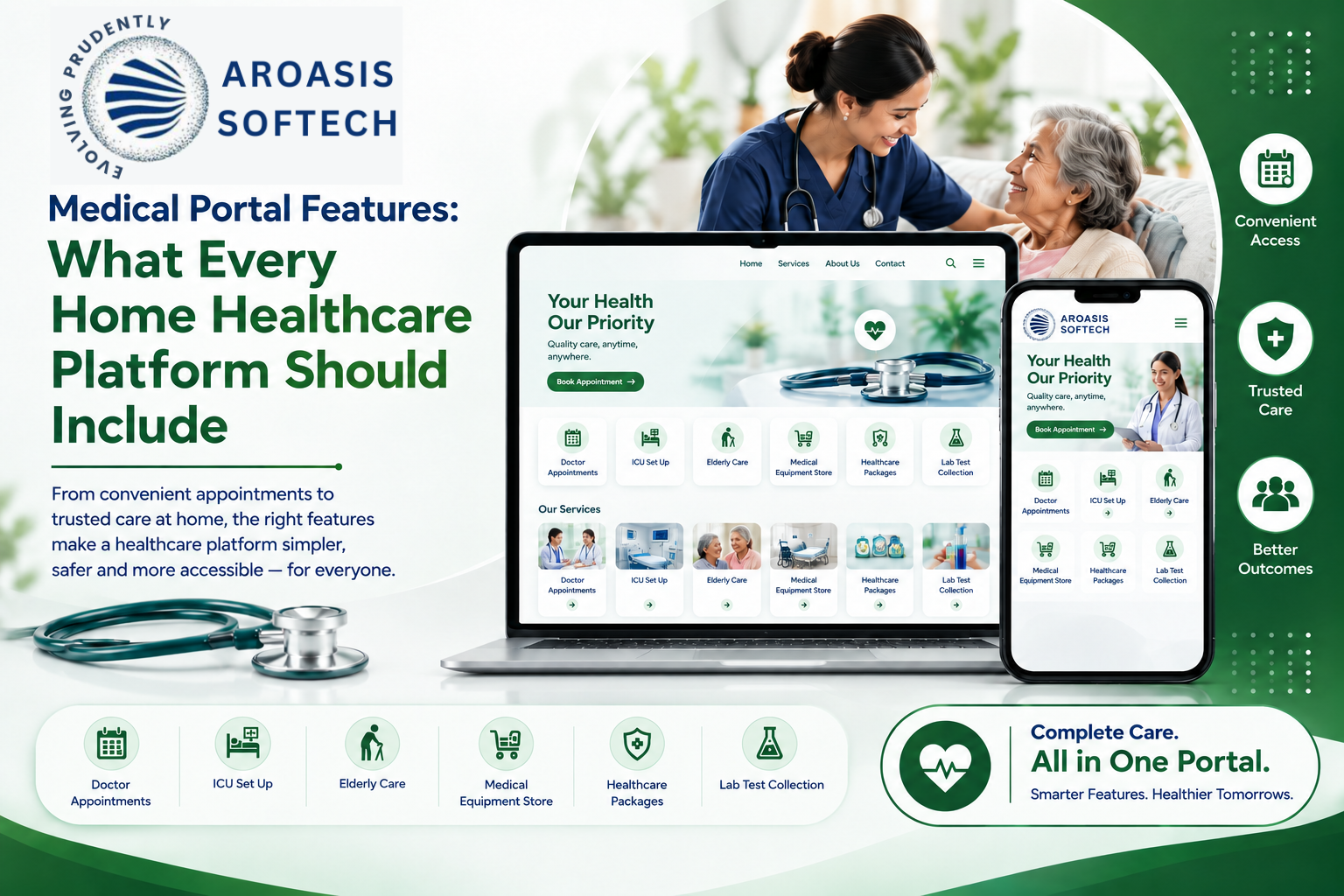
Medical Portal Features: What Every Home Healthcare Platform Should Include
Patients no longer look for healthcare in one place. In a single week, the same person might book a doctor's visit, arrange a lab test at home, and rent a wheelchair for a relative recovering from surgery. If each of those needs a different website, phone number, and provider, the experience falls apart. A medical portal fixes that by putting the whole journey in one place.
But a portal is only as good as its features. This post walks through what a medical portal is, the features a home healthcare platform should include, and the details that are easy to overlook.
What Is a Medical Portal?
A medical portal is a custom digital platform that brings multiple healthcare services together, so patients can discover, book, and pay for care without jumping between providers. Depending on the business, it can serve patients, doctors, nurses, caretakers, or all of them.
Medical Portal vs. a Regular Healthcare Website
A regular healthcare website is mostly informational: who the clinic is, what it offers, how to call. A medical portal is transactional and structured. Users can take actions, such as booking an appointment, requesting a lab sample collection, or renting equipment, and the platform is organized around real patient journeys rather than a list of services.
- Healthcare website: informs visitors, and the action usually happens offline (a phone call or walk-in).
- Medical portal: lets users act online, with categories, booking flows, payments, and service discovery built in.
Core Features of a Medical Portal
The right feature set depends on your services, but a well-rounded home healthcare portal typically includes:
- Doctor appointment booking: find a doctor, choose a slot, and schedule a visit without a phone call.
- Teleconsultation: remote consultations between patients and doctors, useful when travel is difficult.
- Lab testing and sample collection: book diagnostic tests, including home sample collection.
- Medical health packages: curated bundles for preventive checkups and routine care.
- Medical equipment rental: short-term rental of home medical equipment for recovery or temporary needs.
- Home care services: post-surgery care, elderly care at home, and ICU setup at home for patients who need more intensive support.
- Online payments: a payment gateway inside the booking flow, so a request becomes a confirmed booking.
Features for the Care Network
A home healthcare business depends on the people delivering care, so the portal should not only serve patients. A dedicated page where doctors, nurses, and caretakers can apply to join lets the network grow without manual back-and-forth, and gives professionals a clear, credible place to start.
Details That Are Easy to Overlook
- Clear service categories: organized around the patient's situation (recovery, elderly care, tests, equipment), so people find the right service within seconds.
- Mobile-first design: most families will arrive on a phone, often late in the day.
- Speed: a slow page loses a worried visitor quickly.
- Privacy and data handling: healthcare data needs careful treatment, and depending on your region, rules such as HIPAA, GDPR, or India's DPDP Act may apply.
- Room to grow: a scalable structure lets you add new service categories later without rebuilding.
See the Features in Action
Want to see how it works? Watch the medical portal feature walkthrough on YouTube, which shows how a user moves through the experience from start to finish.
Benefits for Providers and Patients
For providers:
- One platform for several services (appointments, tests, packages, rentals, home care) instead of separate systems.
- Less manual coordination, since bookings and requests arrive in a structured form.
- A scalable base, so new service categories can be added as the business grows.
For patients:
- One place to find, book, and pay for different kinds of care.
- Less time spent searching across multiple websites and phone lines.
- Support that follows their situation, from a first consultation through recovery at home.
A Real Example: The IHS Platform
At Aroasis Softech, we built a home healthcare service platform for IHS that brings doctor appointments, teleconsultation, lab testing and sample collection, medical health packages, medical equipment rental, post-surgery care, elderly care, and ICU setup at home into one connected platform, along with online payments and a page for doctors, nurses, and caretakers to join. The whole system was developed and tested in 15 days. You can read the full breakdown in our IHS medical portal case study.
Planning a Medical Portal?
Aroasis Softech is a custom software and web development company based in Vadodara, India, with offices in Germany and Mumbai. If you are planning a medical portal, doctor appointment platform, or home healthcare service platform, get in touch with our team and we will help you decide which features to launch with first.